Finally a full beard with a professional beard transplant
Bald patches, thin beard growth or an uneven beard line are a daily source of frustration for many men. At HM Hair Transplantation we help you achieve a full, natural-looking beard using the advanced sapphire technique. A beard is more than facial hair: it is part of your identity and a direct boost to your self-confidence.
- Full, even beard that suits your face shape
- Sapphire technique for minimal scarring and faster recovery
- Personal treatment plan fully tailored to your beard wishes
No-obligation advice · Personal analysis · Transparent treatment
Why choose
HM Beard Transplantation?
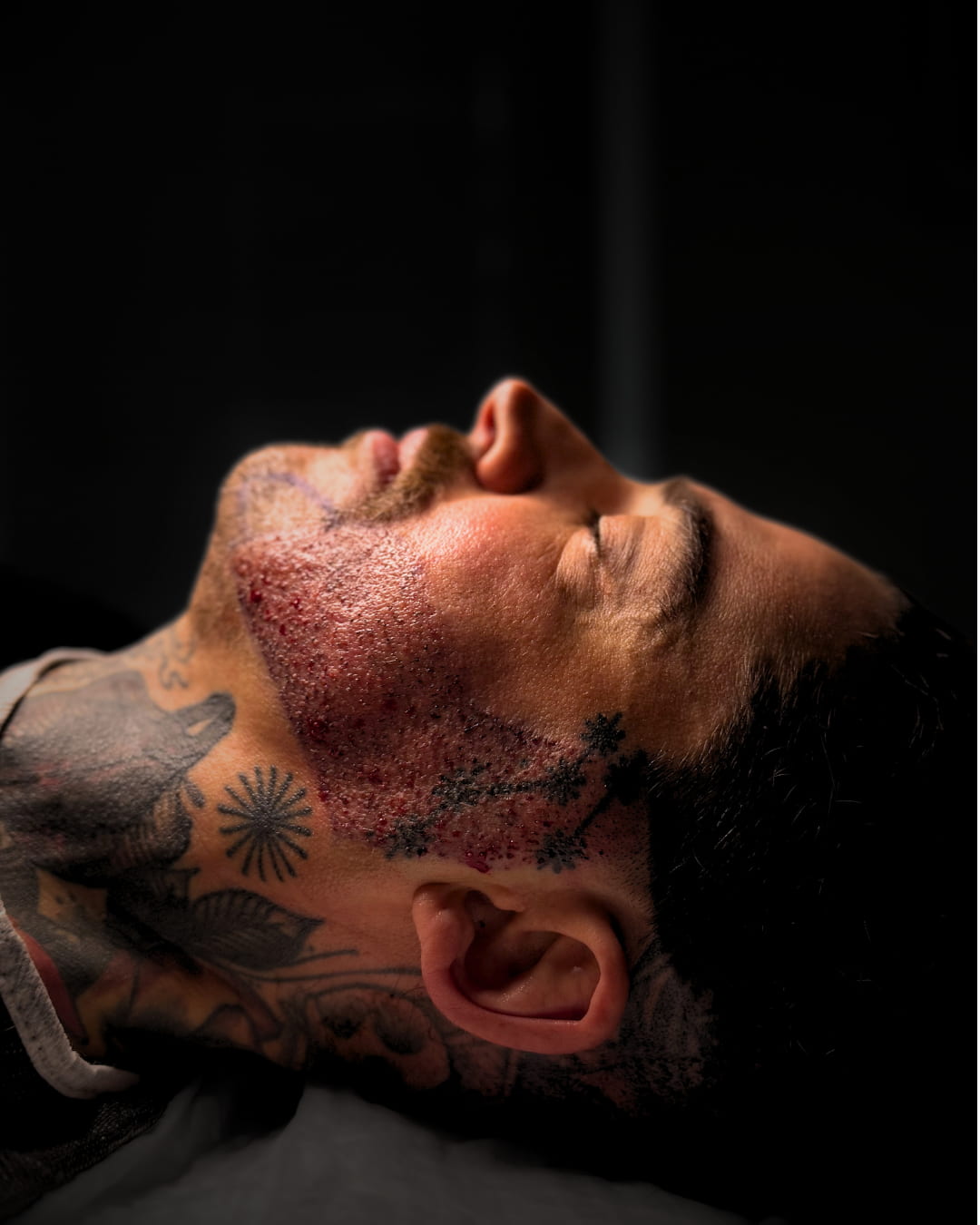
We combine medical expertise with personal guidance for a full, natural-looking beard. The result suits your face and is indistinguishable from a real beard.
Your beard transplant is in the hands of medically certified specialists with hundreds of successful facial treatments to their name.
We work exclusively with the advanced sapphire FUE method for minimal scarring, faster recovery and a maximally natural beard line.
Every treatment plan is fully tailored to your face shape, beard pattern and personal wishes. No standard approach — a beard that suits you.
Thanks to our cooling technique and precise placement, more than 97% of transplanted follicles survive and the beard grows in fully and naturally.
From the first day after treatment to the full beard result at 9 months, a dedicated contact person guides you through the entire recovery process.
You receive a clear quote including consultation, treatment and complete aftercare. No hidden costs, no surprises afterwards.
The sapphire
beard transplant
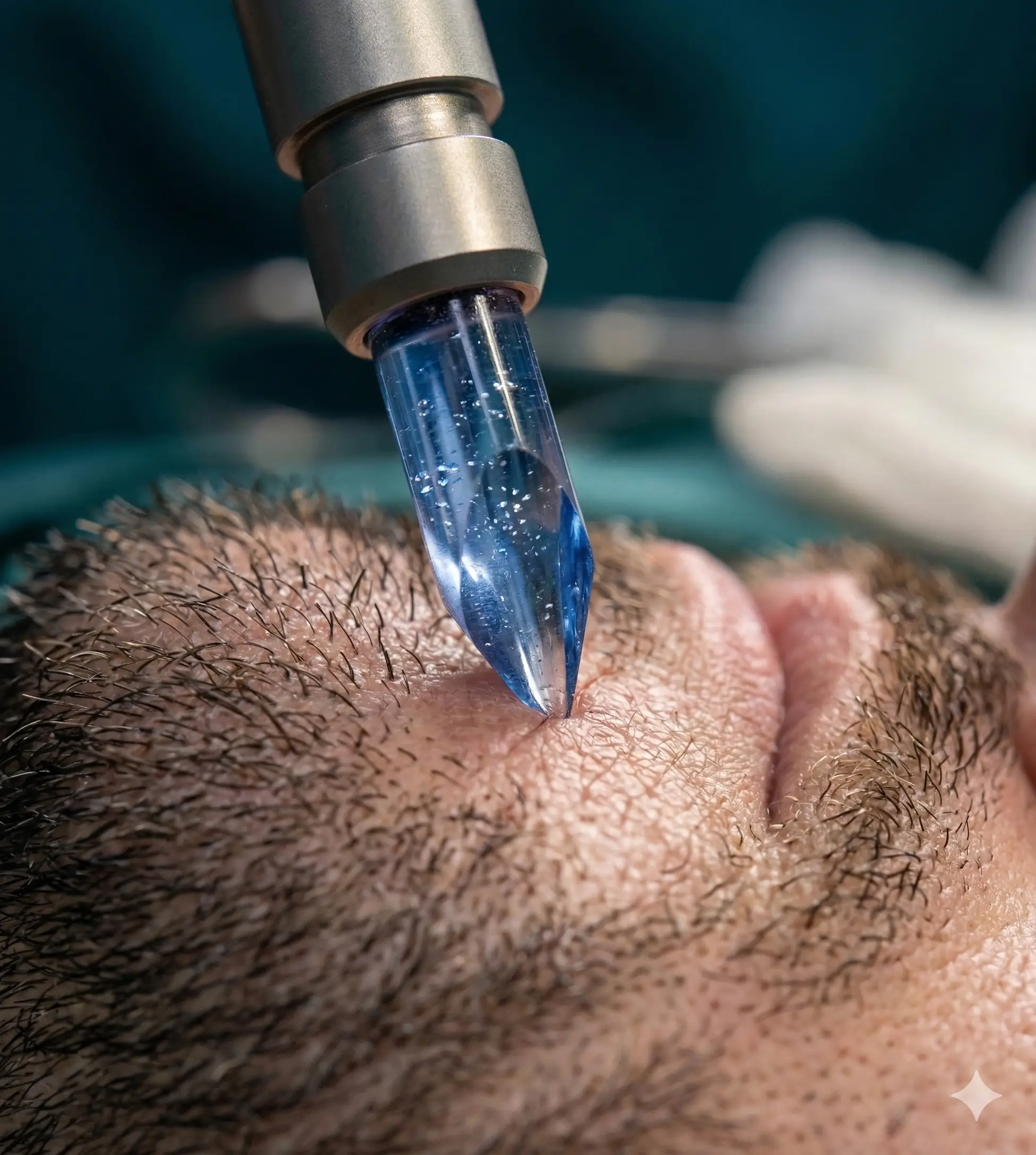
In the sapphire FUE method, beard follicles are extracted and placed one by one via micro-incisions made with a precision sapphire blade. This ensures precise placement in the exact growth direction of your beard, with minimal scarring and a completely natural end result.
- 01Follicle extraction Healthy hair follicles are individually extracted from the donor area at the back of the head using a micro-punch of 0.7–0.9 mm.
- 02Sapphire micro-incisions Using a sapphire blade, extremely fine channels are created at the exact angle and growth direction of your natural beard line.
- 03Graft placement Each follicular unit is carefully placed for a full, even beard that suits your face shape.
What does your treatment cost exactly?
Select the zones and instantly receive a realistic indication of treatment scope and costs.
Price indication per zone
Click on a zone to instantly see an indication.
Indication based on selected zones. Final price follows after medical intake.
Everything about beard transplantation
Honest answers to the questions you may not have dared to ask yet.
Am I a suitable candidate for a beard transplant?
Most men with bald patches in the beard, thin beard growth or no beard growth at all are good candidates for a beard transplant. The main requirement is a sufficiently filled donor area, usually the back or sides of the head, from which the necessary hair follicles are harvested.
Age plays a limited role, although we sometimes advise men under 22 to wait until beard growth has fully developed. Medical conditions such as alopecia areata require a separate assessment, as the immune system may also attack transplanted hairs.
During your free consultation we assess your donor area, beard growth pattern and overall health to determine whether and when a beard transplant is the right choice for you.
How many grafts do I need for a full beard?
The number of grafts required varies greatly from person to person and depends on the desired end result and the current beard growth. For filling in bald patches or thickening an existing beard, 500 to 1,500 grafts are generally needed. For a completely new beard from scratch, including cheeks, jaw line and upper lip, you should expect 1,500 to 3,500 grafts.
A graft contains an average of one to two hair follicles. For a beard, single-hair grafts are preferably used along the edges for a natural hairline, while multi-hair grafts increase density in the centre.
The exact number is determined during the consultation based on your facial structure, the desired beard shape and the available donor capacity. We always give you an honest and realistic recommendation without inflating the number.
How natural does a transplanted beard look?
A skilfully performed beard transplant is indistinguishable from a natural beard to the outside world. The key word is placement angle. Beard hairs grow from the skin at a specific, almost horizontal angle. When the grafts are placed at the correct angle and in the natural direction of growth, the result falls perfectly in line with the surrounding hairs.
The hairline along the jaw line and upper lip requires extra attention. We draw out the desired beard shape in advance and discuss this with you, so that the end result matches your facial structure and personal style.
Because the transplanted hairs come from your own head, they have the same colour, thickness and growth characteristics as your existing beard hairs. After full recovery, on average after twelve months, there is no visible difference whatsoever.
What is the difference between a beard transplant and a hair transplant on the head?
The technique is FUE in both cases: hair follicles are removed one by one from the donor area and placed at the desired location. The fundamental difference lies in the precision and placement angle required.
Beard hairs grow almost horizontally from the skin, at an angle of sometimes just five to ten degrees. This makes placement technically more demanding than a hair transplant on the head, where the follicles are placed at a steeper angle. A physician with specific experience in beard transplants knows these nuances and adapts the technique accordingly.
The recovery period also differs slightly. The face is more sensitive than the scalp and may swell a little more in the first few days. This generally subsides completely within three to five days and is easy to conceal with a beard or facial hair.
What will my beard look like in the months after the treatment?
During the first few days after the treatment, small crusts are visible on the treated areas. This is normal and disappears within seven to ten days. Slight swelling in the face may occur during the first three days, but it can generally be easily concealed with existing beard growth.
Between week three and month four, the transplanted hairs fall out. This is the shock loss phase and worries many patients, but it is a normal and necessary part of the recovery process. The hair follicles remain intact beneath the skin and then begin producing new, permanent hairs.
From month four, the first new beard hairs appear, initially fine in texture. The definitive result with full density and the final hair texture is visible between month twelve and eighteen. Only then can you style your beard fully to your liking.
Can I shave and style my beard normally after the transplant?
Yes, but not immediately. During the first two weeks after the treatment, the treated area must not be touched with a razor or trimmer. The hair follicles need time to properly anchor in the skin. Washing is permitted, but only with the supplied special shampoo using light patting movements — never rubbing.
From week three you can carefully begin shaving around the treated area. The treated area itself may only be shaved once the crusts have completely disappeared and the skin has healed, which takes an average of two to three weeks.
Once the new hair growth gets underway, the transplanted beard behaves exactly like a normal beard. You can shave it, trim it, let it grow and style it as you wish. The transplant places no restrictions whatsoever on your beard care in the long term.

Discover what is possible for your beard
Every beard is unique and requires a personal approach. During the free consultation we assess your donor area and growth pattern and discuss a realistic expected result. No obligations, just honest and personal advice about your ideal beard.
- Personal assessment of your beard growth and donor area
- Insight into the number of grafts required for your desired beard
- Honest advice on the expected result and recovery period
- Free and completely without obligation
More than 2,000 satisfied patients · Certified physicians · Aftercare included